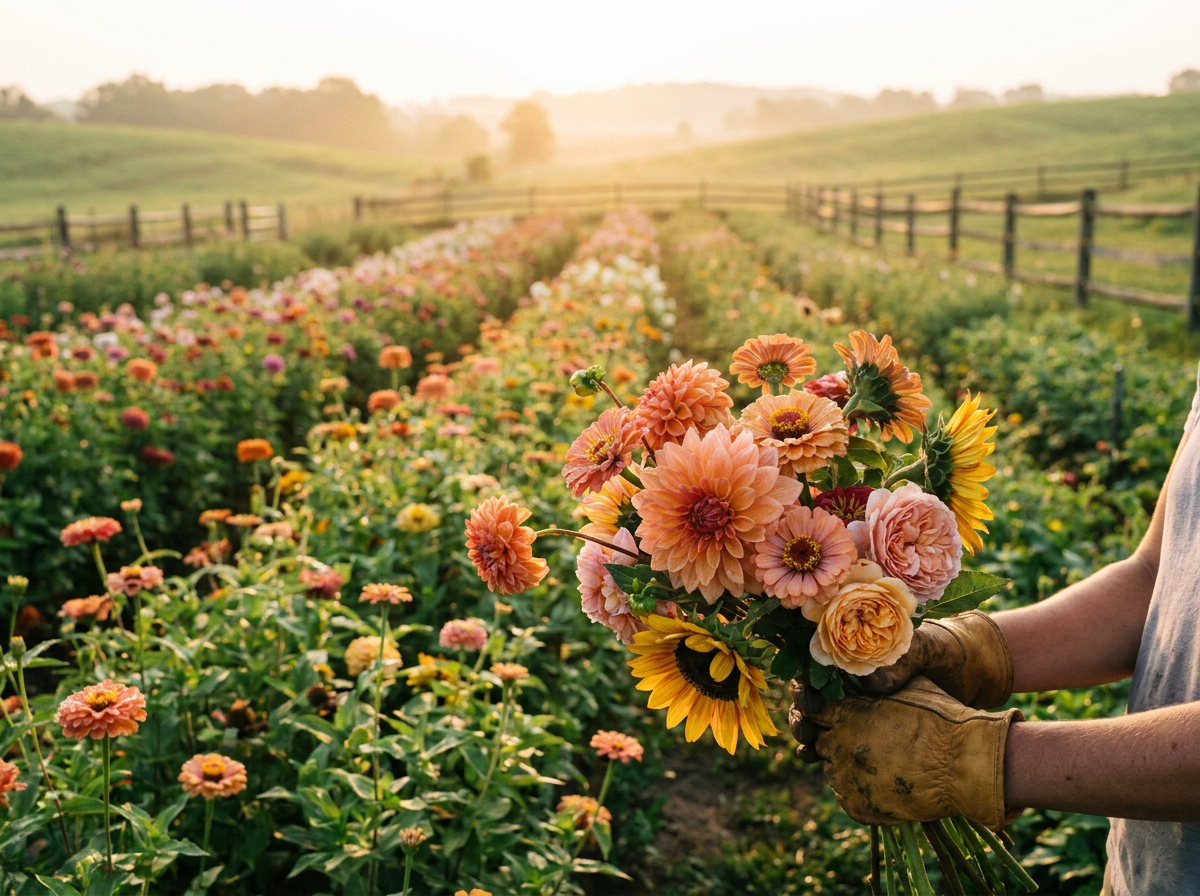
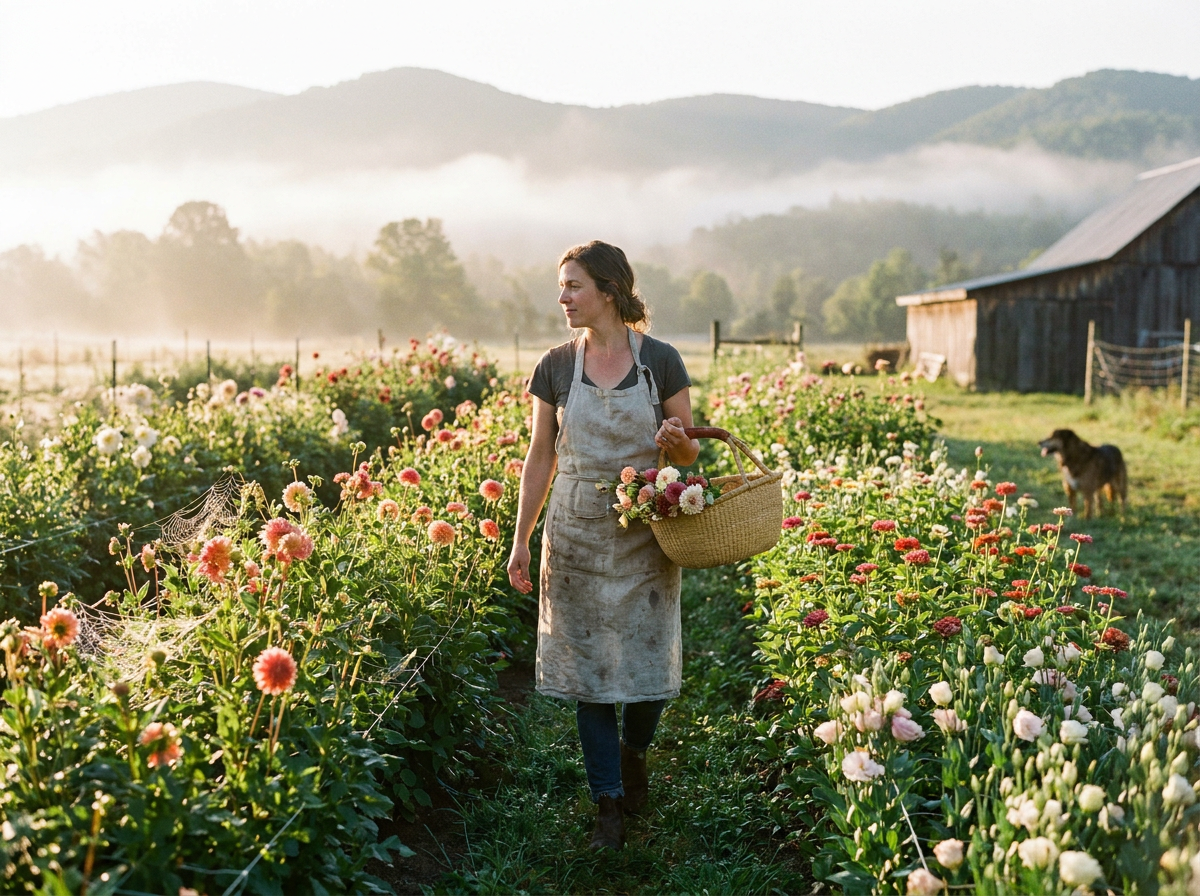
What does it actually look like to grow over 50 varieties of flowers on a three-acre pesticide-free farm in rural West Virginia? We're pulling back the curtain on how the farm runs — and what it means for your flowers.
People often ask what a flower farm actually looks like in practice — and the honest answer is that it's equal parts beautiful and intensely demanding. Our three-acre micro-farm on the Virginia and West Virginia border is the foundation of everything we do at Falling Run Flowers & Design, and understanding what goes into it helps explain why farm-grown florals are so different from what you find at a conventional florist.
Before Sunrise
Harvest happens early — usually before 7am, before the heat of the day causes blooms to open too quickly or wilt before they can be processed. We move through the fields with buckets of cool water, cutting at the right stem length and stage of bloom for each variety. Timing matters enormously: a dahlia harvested one day too early won't open; one day too late and it won't last through an event.
The morning harvest is also the best time to catch problems early — pest pressure, disease, irrigation issues — before they spread. The farm rewards attention.
The Processing Room
After harvest, every stem goes through processing in our cooled studio space. This means stripping lower leaves, re-cutting stems under water to prevent air bubbles, and placing flowers in treated hydration solution. Different varieties have different needs: tulips need to be processed upright; peonies benefit from cold storage for a day before use; ranunculus should be processed quickly.
This step — which most people never see — is where a lot of the quality difference lives. Properly processed flowers last days longer and open more beautifully than flowers that were cut and immediately packed for shipping.
Design Days
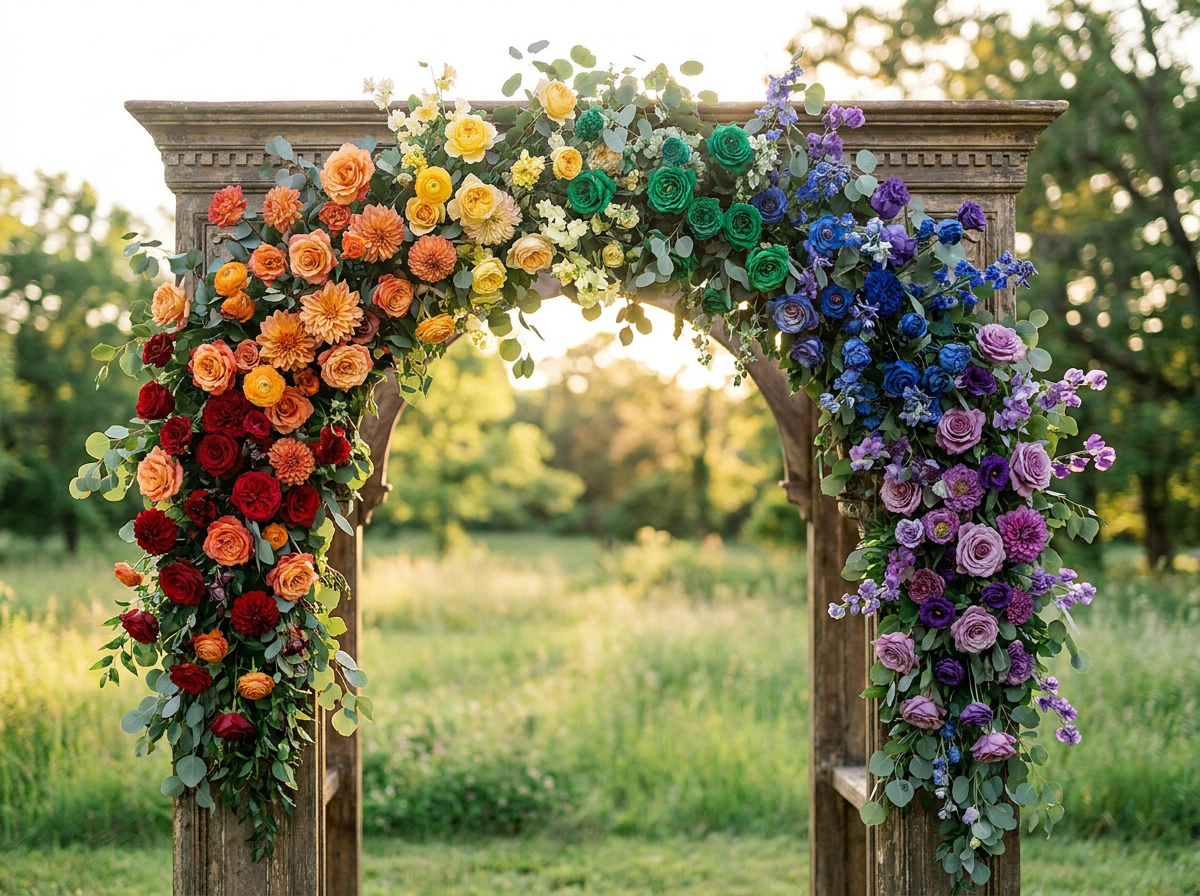
For event weeks, design days typically start two to three days before the event. This is when we begin pulling blooms out of cold storage, assessing what's opening at the right rate, and starting the more time-intensive pieces — large ceremony installations, floral arches, and anything that needs to hold structural form.
Bouquets and reception pieces typically come together in the 24-48 hours before the event, when the flowers are at their peak and can be designed, conditioned, and delivered without unnecessary time in storage.
What We Grow
Our farm currently grows over 50 varieties across the seasons — from early-spring anemones and ranunculus to summer dahlias, zinnias, and lisianthus, through fall celosias, marigolds, and chrysanthemums. We're pesticide and herbicide-free, which matters both for the health of the soil and for the families whose wedding guests will be surrounded by our flowers.
Self-seeding perennials and hardy annuals are the backbone of the operation — they come back reliably, they're economical to grow, and they tend to be the varieties that excite us most from a design perspective.
The Connection
When you choose farm-grown flowers for your wedding or event, you're choosing blooms that were planted, tended, and harvested by the same people who will be arranging them. That's not something we take for granted — it shapes how we think about every arrangement we create.
If you'd like to see the farm in person, we love hosting clients for consultations here. There's nothing quite like seeing where your wedding flowers will come from. Reach out to schedule a visit.