Timing is everything in floristry. Choosing blooms that are in season not only keeps costs in check — it means fresher flowers, more vibrant color, and arrangements that feel truly alive.
One of the most impactful decisions you'll make in your wedding floral planning isn't about color or style — it's about timing. Choosing blooms that are in season at your wedding date means fresher flowers, richer colors, and arrangements that feel genuinely alive rather than forced. And because we grow over 50 varieties on our own farm right here on the Virginia and West Virginia border, we know better than anyone what flourishes when.
Spring (March – May)
Spring is a florist's dream. Ranunculus, tulips, peonies (arriving in late April), anemones, sweet peas, and hellebores are all at their peak. The palette naturally runs soft — blush, lavender, ivory, and the most delicate butter yellows. If you're dreaming of a romantic, garden-party aesthetic, a spring wedding date gives you the widest range of options with the freshest results.
On our farm, spring is when we're harvesting the first ranunculus and anemone crops. These varieties have an incredibly short vase life after cutting, which means farm-grown truly matters — flowers that travel across the country for four days simply cannot compete with blooms cut the day before your ceremony.
Summer (June – August)
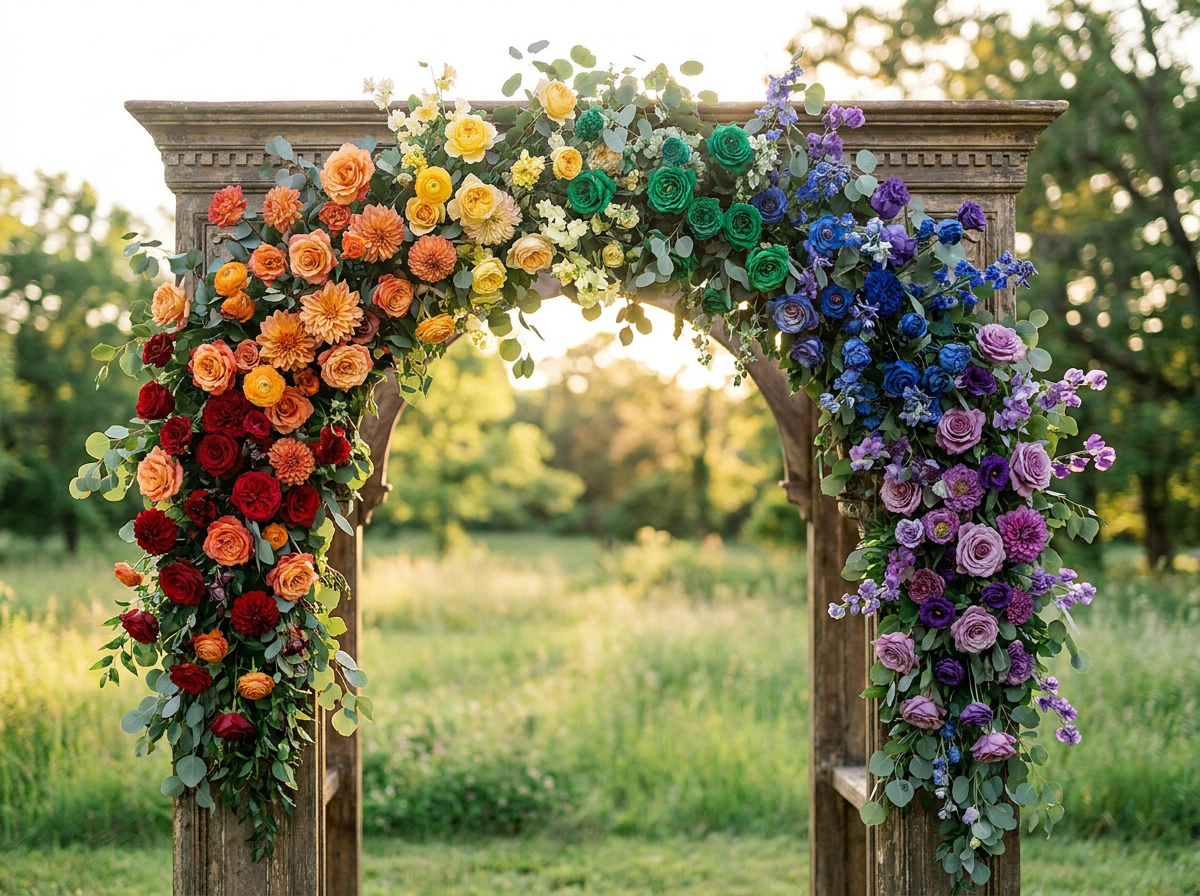
Summer opens the door to bold, lush arrangements. Dahlias, sunflowers, zinnias, lisianthus, lavender, and garden roses reach their fullest expression. The heat does require some planning — flowers need to be conditioned carefully and kept cool on the morning of your event — but the payoff is breathtaking.
This is also the peak of our micro-farm harvest. Summer weddings at venues like Landfall Lodge or Puesta Del Sol, with their open-air settings and natural light, are perfectly suited to the overflowing, wild beauty of summer blooms.
Fall (September – November)
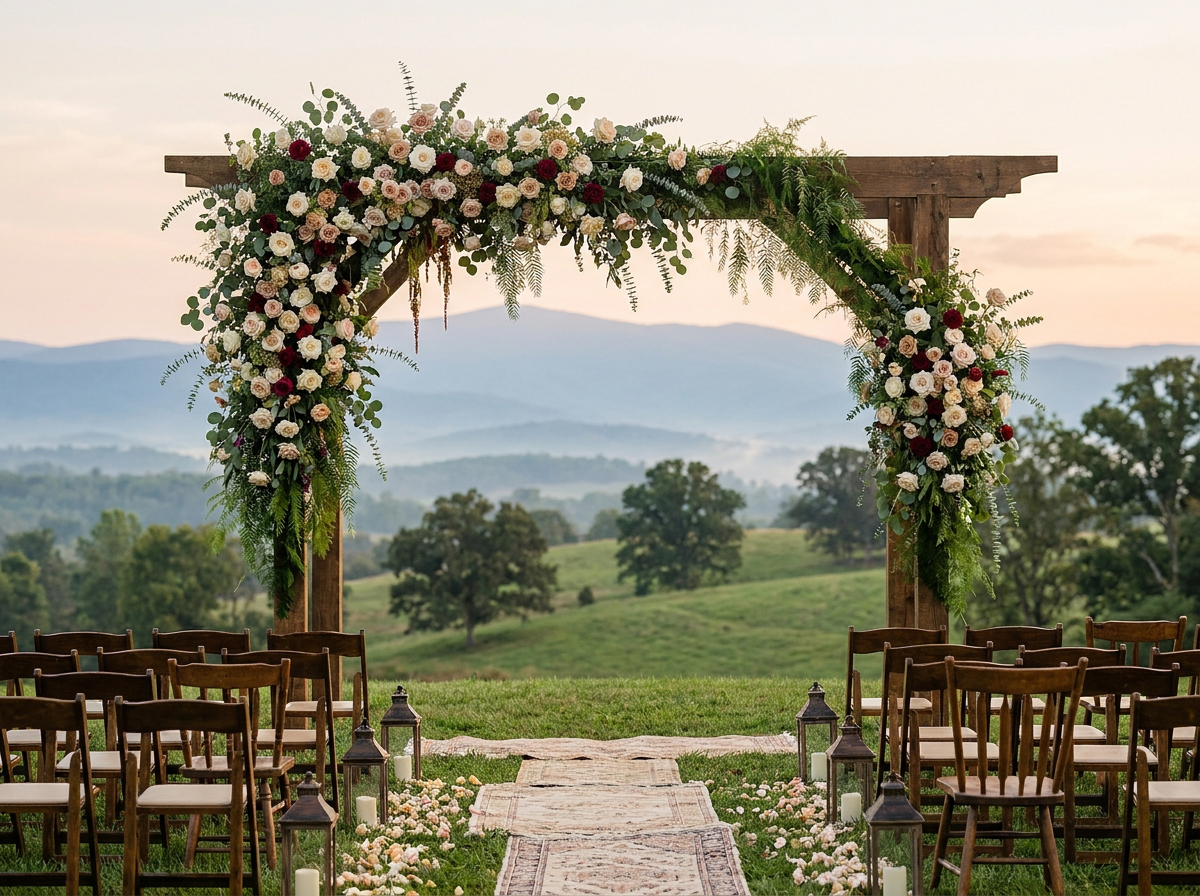
Autumn brings a warmth and depth that no other season can match. Dahlias continue strong into October, joined by marigolds, chrysanthemums, celosias, amaranth, and the rich burgundy and copper tones that define the season. Fall weddings tend toward moody, layered palettes — and our farm-grown dahlias, which we harvest up until the first hard frost, are some of the most sought-after blooms we grow.
If you're planning a fall celebration in the Shenandoah Valley, you're in luck — the surrounding landscape essentially becomes part of your floral design.
Winter (December – February)
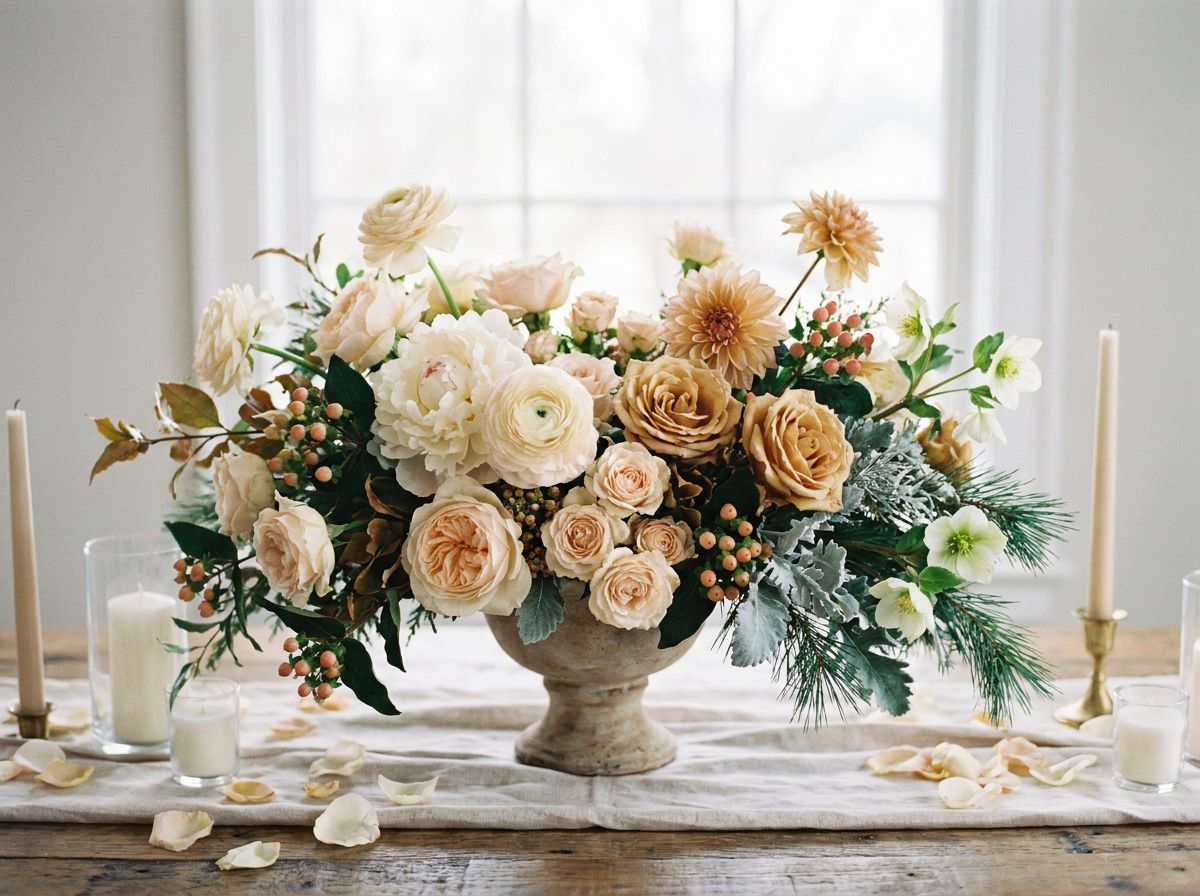
Winter florals require a different kind of creativity. While our farm is dormant, we work closely with trusted Holland importers and regional distributors to source premium blooms — white amaryllis, garden roses, anemones, and winter berries. The palette leans into deep jewel tones, ivory, and evergreen, and there's a particular elegance to winter arrangements that's hard to replicate in any other season.
Winter does carry slightly higher sourcing costs, which we're always transparent about. But the results — candlelit, lush, and deeply romantic — are often our clients' favorites.
Our Recommendation
When you come in for a consultation, one of the first things we'll talk about is your date and what's naturally available. We'll never try to force out-of-season flowers into your design — not because we can't source them, but because working with the season is always more beautiful. The flowers are happier, and so are you.
Ready to start planning? Reach out for a consultation and we'll walk through exactly what's growing when your wedding date arrives.