Between 60 and 70 percent of our wedding clients ask about preservation. Here's an honest guide to your options, what to expect, and how to plan ahead so your blooms can last a lifetime.
One of the most common questions we hear after a wedding proposal — almost as common as "what flowers do I want?" — is "can I keep them forever?" The answer is yes, with some planning. Between 60 and 70 percent of our wedding clients ask about preservation, and we've guided hundreds of couples through the process over the years. Here's what you actually need to know.
Your Main Options
Resin Preservation
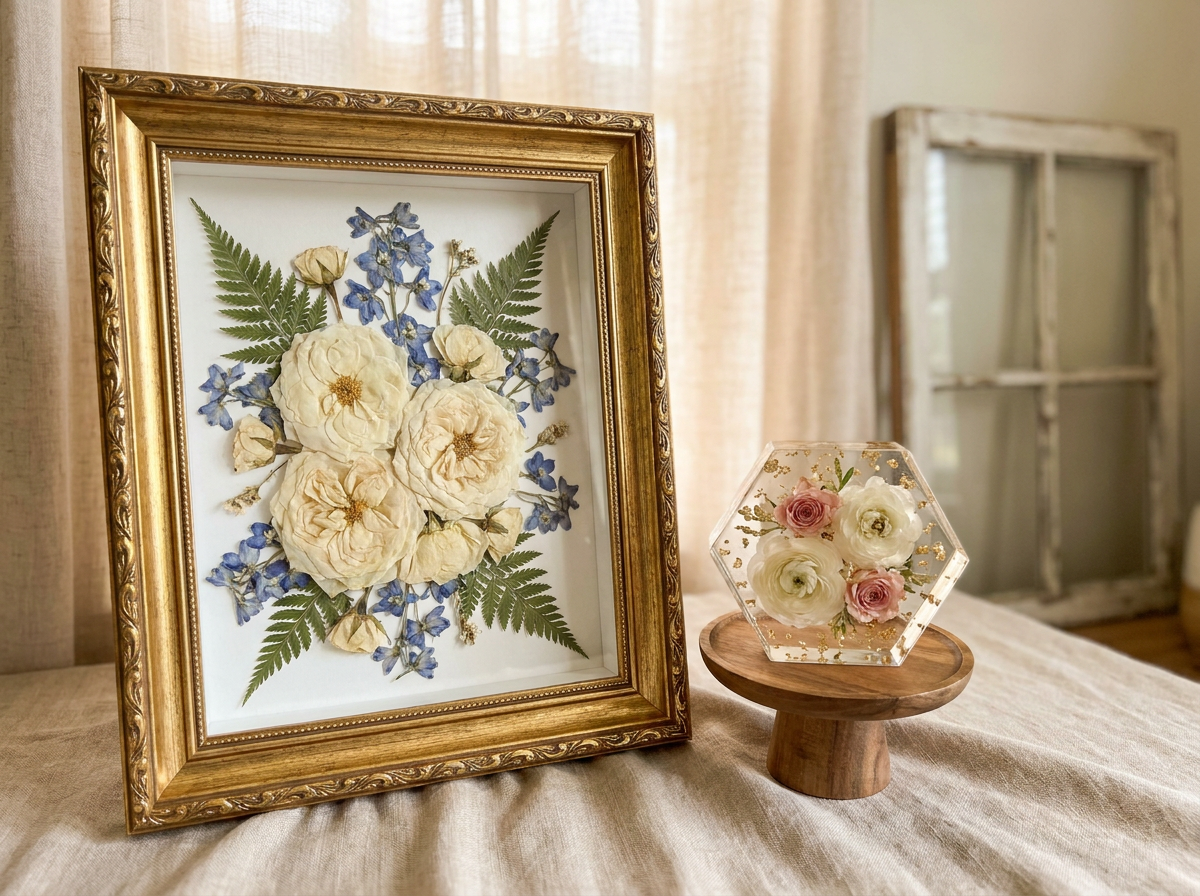
Resin preservation involves embedding dried flowers in clear acrylic resin — creating paperweights, jewelry, coasters, framed pieces, and more. It's become enormously popular and for good reason: when done well, the results are stunning. The flowers maintain their color and form inside a crystal-clear medium, making them visible from every angle.
The process requires expert drying before casting, and the final color can shift slightly — particularly with white flowers, which may yellow over time. Selecting a skilled preservation artist is critical.
Pressed Flower Art
Pressing creates flat, botanical-art-style pieces — framed shadowboxes, illustrated cards, or decorative panels. It's one of the most accessible preservation methods and produces beautiful results with the right flowers. Thinner, more delicate blooms (sweet peas, anemones, violas) press exceptionally well.
Freeze Drying
Freeze drying uses a specialized process to remove moisture while maintaining the three-dimensional form of the flower almost perfectly. A freeze-dried bouquet can look remarkably similar to the fresh original, though it becomes fragile and should be kept under glass. This is the most expensive option but delivers the closest result to the original arrangement.
Air Drying
The simplest option. Hanging your bouquet upside down in a cool, dry space will naturally dry many varieties. Dahlias, roses, lavender, and strawflowers dry particularly well. The color will deepen and shift, and the flowers will become more textural — beautiful in a different way than the fresh arrangement, but still deeply meaningful.
Planning Ahead
The single most important thing to know about preservation: timing matters enormously. If you want your bouquet preserved, you need to hand it off to your preservation specialist very quickly after your reception — ideally within 24 to 48 hours. The longer flowers sit in water or warm air, the harder high-quality preservation becomes.
This means you need to have your preservation plans in place before your wedding day, not after. Book your preservation specialist in advance, communicate with them about the handoff process, and let your floral designer know so we can choose varieties that respond well to your preferred method.
Our Role
We don't currently offer in-house preservation (though it's on our roadmap). What we do offer is a trusted network of preservation specialists we've worked with closely over the years. We'll refer you to the right person based on your preservation goals, budget, and preferred method — and we'll make sure your bouquet is designed with preservation in mind if that's a priority for you.
Ready to start planning? Let's talk — we'd love to help you think through every aspect of your floral experience, from first bloom to forever.